
Greater Edmonton Market Wrap-Up: Year-End Sales Fall; Condo Values Shift
Sunday Jan 18th, 2026
As we usher in 2026, Greater Edmonton’s real estate market closed out December with notable moderation in activity. Whether you're considering buying or selling, understanding the latest trends can help you make informed decisions in the months ahead.
Slower Sales Activity in December
In December 2025, REALTORS® reported 1,315 residential transactions in the Greater Edmonton Area (GEA), representing a significant pullback compared with previous months and lower activity relative to December 2024. Sales declined approximately 20% from November and roughly 7.5% year-over-year, driven largely by the typical seasonal slowdown as buyers and sellers focus on holidays and year-end priorities.
New Listings and Inventory Trends
There were 1,389 new listings introduced to the market in December. While this figure was down sharply from November, it still showed a slight increase compared to last year, contributing to a year-over-year inventory rise of nearly 29%. However, inventory levels were lower than in November, reflecting a common winter tightening of active listings as fewer sellers choose to list during the holidays.
Average Prices and Benchmark Values
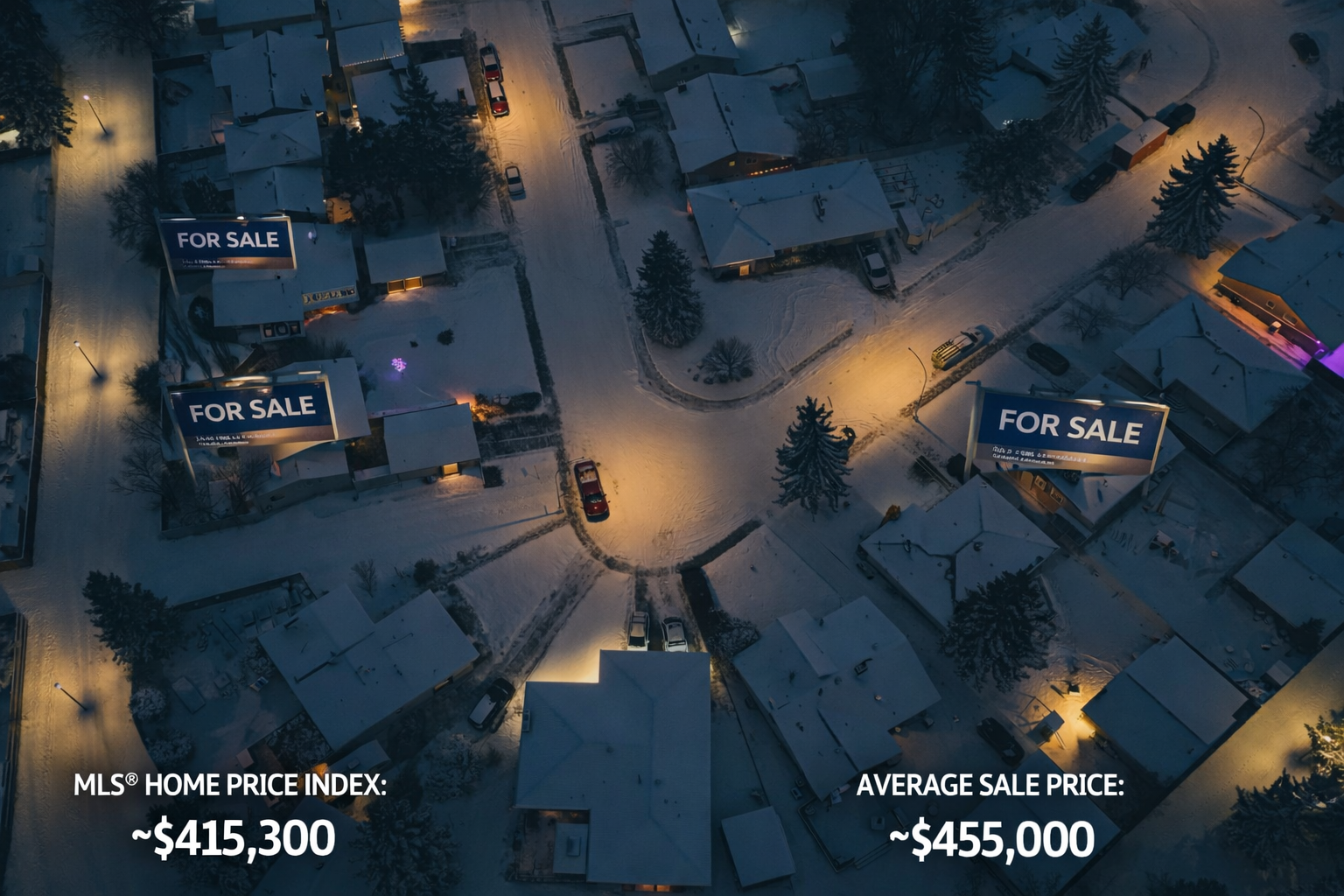
Overall residential average selling prices edged higher month-to-month, landing just under $455,000, and were notably above December 2024 levels. Meanwhile, the MLS® Home Price Index (HPI) composite benchmark for the area sat at approximately $415,300, essentially flat from November yet reflecting positive annual growth.
What Property Types Showed
Different property categories demonstrated distinct trends as the year ended:
-
Detached Homes: Continued strong performance with average prices climbing over 2% from November and showing meaningful annual gains. Sales did decline in December, but the pricing trend signals ongoing demand for single-family homes.
-
Row and Townhomes: These properties also saw solid price growth, with average values rising month-over-month and year-over-year, even as sales activity softened.
-
Semi-Detached Properties: Average prices were slightly lower than in November but remained above last year’s levels, mirroring a seasonal moderation in buyer interest.
-
Condominiums: In contrast to other segments, condo prices declined both month-to-month and compared with December 2024. Sales and new listings in this category also moved lower, suggesting continued buyer caution or shifting priorities among condo buyers.
Seasonal Market Patterns
End-of-year slowdowns are normal in real estate, as fewer buyers are actively searching and many sellers wait until spring to list. This seasonal factor can create short-term dips in transactions and temporary price adjustments, particularly in specific segments like apartments and condos.
What This Means for You
For Buyers: The winter lull can offer opportunities to negotiate — especially on condos and properties with longer days on market. With inventory modestly elevated compared to last year, there’s often more choice overall.
For Sellers: Detached homes and townhomes still maintained year-over-year price gains, indicating continued interest. Strategic pricing, quality marketing, and timing can help your listing stand out, even in slower months.
Looking Ahead
As we move into 2026, most sellers and buyers tend to become more active once spring arrives. Current trends — especially the strength in detached and attached homes outside the condo segment — may set the stage for a balanced, competitive market in the coming months.
If you're planning a move, have questions about how these trends could affect your goals, or want a custom market analysis, I’m here to help guide you with local expertise every step of the way.


Post a comment